
Quick answer: get down to puppy height and remove anything they could chew, swallow or pull down: cables, shoes, bins, cleaning products, medicines and toxic foods. Then set up one safe puppy zone with their bed, water and toys, and use a gate to keep them out of the kitchen and off the stairs when you can't watch them.
Puppies explore the world with their mouths. In their first few months they'll chew, lick and pull at almost anything they can reach. Puppy-proofing isn't about making your home perfect, it's about removing the obvious dangers and giving your puppy a safe place to be when you can't supervise.
Start at puppy height
Crouch or kneel in each room and look around. Anything you can see dangling, poking out or lying on the floor is fair game to a puppy: cables, curtain cords, shoelaces, socks, children's toys and the corners of rugs.
Kitchen
- Use a bin with a lid that locks or keep it in a cupboard.
- Keep food off low worktops and tables. Chocolate, grapes and raisins, onions, garlic and anything sweetened with xylitol are toxic to dogs.
- Store cleaning products in high cupboards or fit child locks.
- Keep the oven, hob and dishwasher off limits. A gate across the kitchen doorway is the simplest way to do this while you cook.
Living room
- Tidy away or cover cables, especially phone chargers and lamp leads.
- Move houseplants out of reach. Some common plants are toxic to dogs, so check any you're unsure of.
- Put remote controls, batteries, coins and small toys away. Button batteries are especially dangerous if swallowed.
- Tie up blind and curtain cords.
Bathroom and bedrooms
- Keep medicines, vitamins, razors and cosmetics in closed cabinets.
- Keep the toilet lid down.
- Shoes, socks, hair ties and underwear are puppy favourites and can cause blockages if swallowed. Keep them in drawers or wardrobes.
Stairs
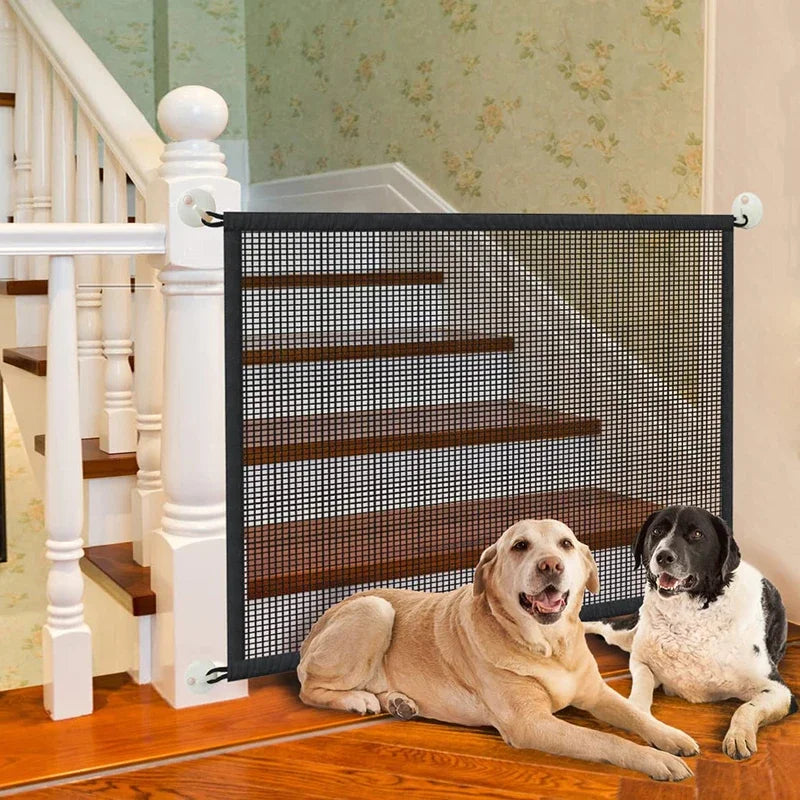
Stairs can be risky for young puppies, who are still learning coordination, and for small breeds. Block the bottom of the stairs with a gate when you can't supervise. For the top of a staircase, use a screw-fixed gate designed for that position rather than a pressure-fit or hook-on gate.
Garden
- Check fences and gates for gaps a small puppy could squeeze through.
- Store garden chemicals, slug pellets and antifreeze securely. They are very dangerous to dogs.
- Cover or fence off ponds and pools.
- Pick up anything sharp, and supervise your puppy outside until you know the garden is secure.
Set up a safe puppy zone
A puppy zone is a small, safe area where your puppy can rest and play when you can't watch them. A utility room, part of the kitchen or a corner of the living room all work.
- A comfy bed. Puppies sleep a lot. A washable bed makes accidents easier to deal with. See our dog bed size guide to pick one they'll grow into.
- Fresh water on a mat. A no-spill bowl and a waterproof feeding mat help with excitable drinkers.
- Safe chew toys to give them something better to chew than your furniture.
- A gate to close the zone off. Our Folding Mesh Safety Gate hooks onto doorframes, stair rails or furniture without tools, folds flat when you don't need it, and comes in widths of 100cm, 115cm and 180cm. It's designed to guide and contain, so supervise determined climbers and don't use it at the top of the stairs.
Keep up the training
Puppy-proofing buys you time while your puppy learns. Reward them for chewing their own toys, swap anything they shouldn't have for a toy, and keep training sessions short and positive. As your puppy matures, you can gradually give them more of the house.
Frequently asked questions
When should I puppy-proof my home?
Before your puppy arrives. It's much easier to set up gates and move things out of reach before there's a puppy following you around.
How long do I need to keep the house puppy-proofed?
Most dogs grow out of the worst chewing by around one year old, though some breeds chew for longer. Keep dangerous items out of reach for life.
What should I do if my puppy eats something toxic?
Contact your vet straight away, even if your puppy seems fine. Take the packaging with you if you can.
Is a safety gate or a crate better?
They do different jobs. A crate gives your puppy a small den, while a gate blocks off a room or the stairs. Many owners use both.
Find gates, bowls and mats in our home, safety and feeding collection. UK delivery is free on every order.