
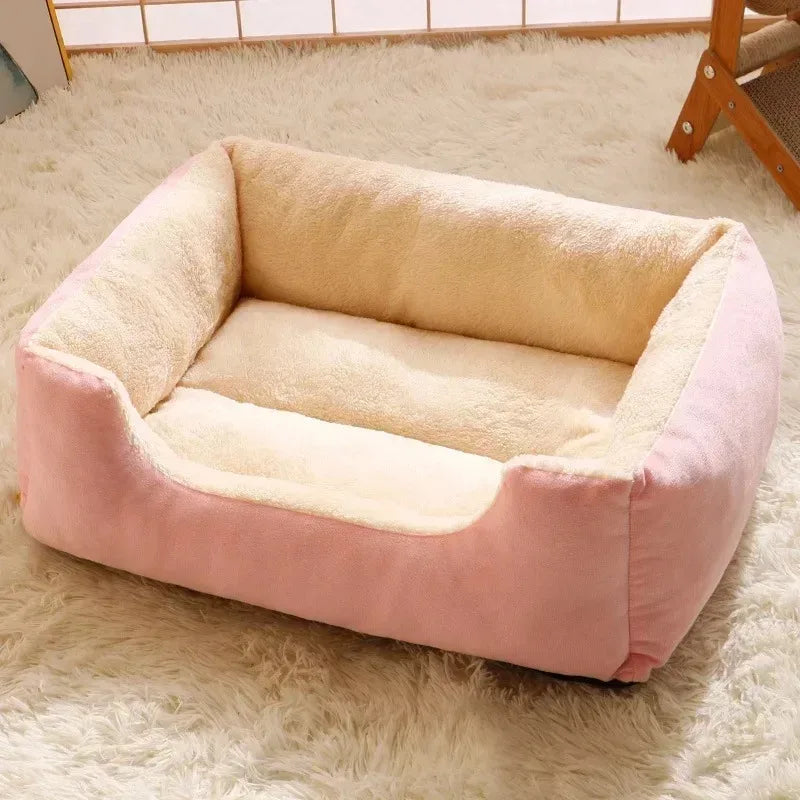
Quick answer: wash your pet's bed every one to two weeks, and straight away after an accident. Remove loose hair first, check the care label, then wash on a gentle cycle with a mild, unscented detergent and an extra rinse. Let it dry completely before your pet uses it again.
A pet bed collects hair, dander, dirt and smells surprisingly quickly. Regular washing keeps it fresh, helps with allergies and makes the bed last longer.
How often should you wash a pet bed?
- Every one to two weeks for most beds.
- Weekly during heavy moulting, for pets with allergies or skin problems, or if your pet sleeps on your bed or sofa too.
- Straight away after accidents, sickness or a muddy walk.
- A quick vacuum or roll between washes keeps hair under control.
Step 1: Get the hair off first
Washing a bed covered in hair clogs your machine and leaves hair stuck to the fabric. Shake the bed outside, then go over it with a vacuum upholstery tool or a reusable pet hair roller. A damp rubber glove pulls stubborn hair into clumps. Our guide to removing pet hair has more tricks.
Step 2: Check the care label
Some beds go in the machine whole, others have a removable cover and an inner cushion that needs different care. If the label gives a temperature, stick to it. Our beds include care instructions on each product page.
Step 3: Pre-treat stains and smells
- Blot fresh accidents with kitchen roll rather than rubbing.
- Use an enzyme cleaner made for pet stains. It breaks down the source of the smell, so your pet is less likely to go in the same spot again.
- Avoid bleach and strong scented products. Pets have sensitive noses and skin.
Step 4: Wash gently
- Use a mild, unscented, non-biological detergent if your pet has sensitive skin.
- Choose a gentle or delicate cycle at the temperature on the label.
- Add an extra rinse to wash out any detergent residue.
- Skip fabric conditioner, which can irritate some pets and flatten plush fibres.
- Large beds may need a launderette's bigger machines. Don't overload your own machine.
Step 5: Dry it completely
Air drying is gentlest. Dry the bed flat or over an airer, turning it now and then so it dries evenly. Plush beds stay softer if you give them a shake and fluff up the fibres with your hands as they dry. Make sure the bed is dry all the way through before your pet uses it again. A damp filling can turn musty.
Beds that make washing easier
- Round Plush Pet Bed: the cover is machine washable on a gentle cycle; air dry it fully before use.
- Plush Basket Bed: machine washable.
- All-Season Pet House Bed: removable, washable cover.
Having two beds, or a spare cover, means your pet always has somewhere to sleep while one is in the wash.
When to replace a pet bed
Replace the bed when the filling has gone flat and no longer cushions your pet, the fabric is torn and the filling is coming out, or smells come back straight after washing.
Frequently asked questions
Can I put a dog bed in the washing machine?
Many beds and covers are machine washable, but check the care label first. Very large beds may be too big for a home machine.
What detergent is safe for pet beds?
A mild, unscented detergent is the safest choice. Non-biological detergent is gentler for pets with sensitive skin.
How do I get rid of a smell in my dog's bed?
Remove the hair, treat any stains with an enzyme cleaner, wash with an extra rinse and dry completely. If the smell keeps coming back, the filling may need replacing.
Can I tumble dry a pet bed?
Only if the care label says so, and on a low heat. Air drying is gentler on plush fabrics and fillings.
Browse washable beds in our dog beds and cat beds collections. UK delivery is free on every order.